Personal Learning Plans
By ericblue Categories: Knowledge Knowledge Management Learning | 2 comments

If you consider yourself an autodidact,
or are an aspiring polymath, then this post may
be of interest. Actually, don’t let those fancy labels fool you. This particular topic is probably
of interest to most people who are interested in learning new things. Many people at one point in
there life have engaged in some sort of self-directed learning.
What is
self-directed learning? Life in general is about learning, but self-directed learning is a much broader and complex
activity. How do you independently acquire a new skill, like learning a new language? Or, how do you
immerse yourself into difficult topics like philosophy or psychology, and come out the other end
with experience and knowledge that can rival or exceed that of a college degree? I’m not sure I have
the answer on the last question, but I am trying to figure it out 🙂
For those people who consider themselves life-long learners, the path to knowledge can be fun and
rewarding. And, at the same time, it can be confusing and frustrating. Often times there isn’t a
shortage of passion and curiosity. But there’s a degree of ambiguity on where to begin. How do you
assess your own learning needs? How do you go about setting your own learning goals? Where will you
get your knowledge/information from? Can it be trusted? And, when will you find (or make) the time
to learn while you’re juggling your day-day responsibilities?
Over the last year, I’ve spent a good bit of time trying to figure out ways to use technology to
make self-directed learning easier (see my original post on
Personal Learning Environments and Knowledge Management). I don’t yet have answers to all of the questions posed above. But, one key element that I’ve
been researching is setting your own learning agenda: or your own
Personal Learning Plan.
The purpose of the Personal Learning Plan is as follows:
- Provide a single place to document your specific learning goals and objectives
- Create a placeholder for future learning source (e.g. Links to numerous book reading lists)
- Document sources of trusted information for learning: websites, blogs, DVD, open courseware, etc.
- Outlines major areas of interest for a learning topic (key things to learn: important dates, people, concepts)
- Provide sequencing for learning activities: progression based on prerequisites and fundamental knowledge requirements
- Lists a timeline for immediate learning plans (<= 3 month window)
I’m still working out wrinkles in this approach, and do plan on posting a sample PLP in an upcoming
post. In the meantime, I’m attaching a mindmap I created on this topic a few months ago.
View the mindmap
here.
Download the mindmap
here (MindManager).
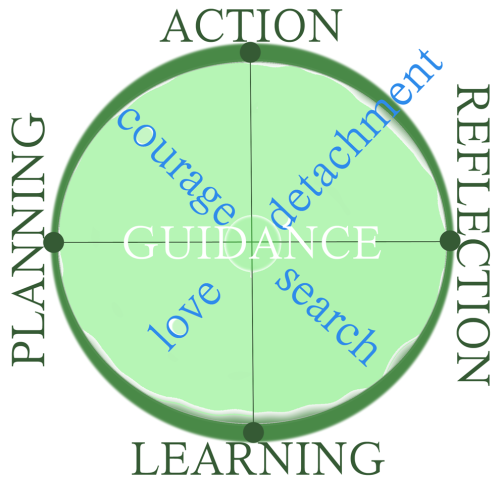
Learning Circle image from
http://www.agileadvice.com/2006/09/19/uncategorized/learning-circle-interview-with-garry-berteig-updated/
2 Responses
-
 Dan Murray
Very useful information Eric. I’ve spent most of my life doing self learning which the web has of course accelerated in just about every way imaginable.
Thanks for this useful post. -
RT
Thanks for this and other posts on PKM and PLE. I’ve found them all very useful and inspiring
Comments are closed.